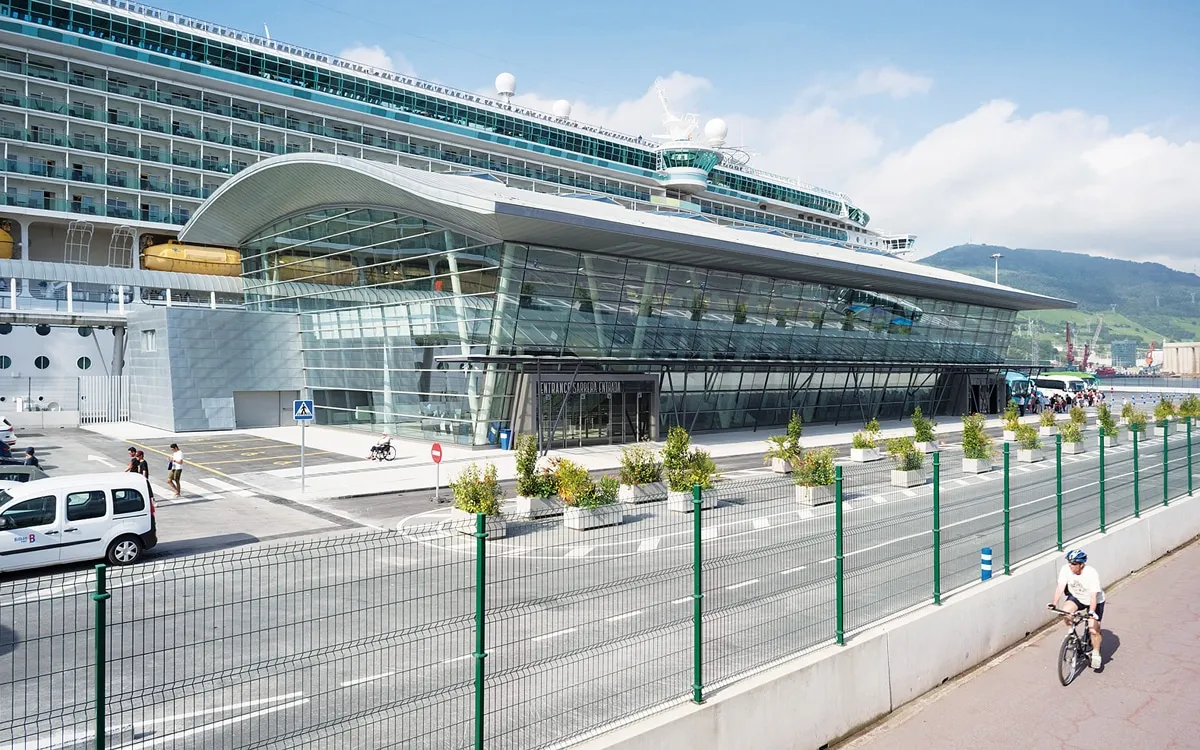
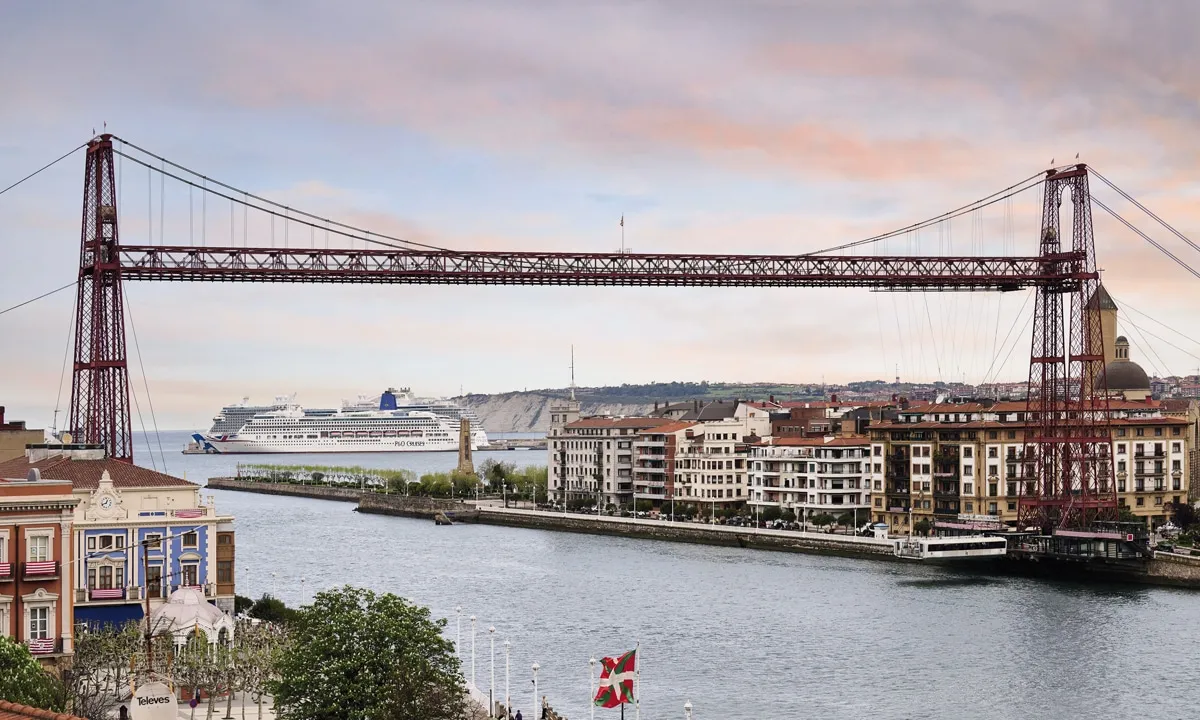
The Cantabrian coast, with the Basque Country at its cultural and culinary heart, has become one of northern Spain’s most appealing maritime tourism destinations. At the center of this evolution lies the Port of Bilbao, a model of innovation and sustainability in the region.
In 2025, the Port of Bilbao has exceeded 90 cruise calls, bringing in 181.017 tourists. With two passenger terminals and the capacity to receive three ships simultaneously—regardless of size or draft—it is fully equipped to handle all kinds of vessels, from state-of-the-art cruise liners to luxury ships.
Beyond cruise traffic, the port also maintains regular ferry connections to the British Isles via Brittany Ferries. The Salamanca ferry sails to Rosslare (Ireland) twice weekly, while the Galicia ferry links Bilbao to Portsmouth (UK), also with two weekly departures.
On the environmental front, the port is advancing with BilbOPS, a project to electrify the cruise berths. OPS (Onshore Power Supply) systems will be installed at Getxo 2 and Getxo 3, enabling ships to plug into the local grid and reduce emissions and noise. There will be three connection points available, allowing two vessels to be serviced simultaneously via mobile systems with a 100-meter operational range. The initiative involves a €78 million investment, of which €14.2 million is funded through the EU’s CEF Transport 2021–2027 program. A 0.5-megawatt solar power plant will also be installed on the terminal car park.
With enhanced connectivity, a broader tourism offering, and a firm commitment to sustainability, the Port of Bilbao is steadily reinforcing its role as a strategic hub on the Bay of Biscay.