As Senior Vice President of MedCruise and Cruise Manager at Corsica Ports, I am pleased to share at ICS, MedCruise’s vision of transformation and cooperation, shaping the future of cruise tourism in the Mediterranean and beyond.
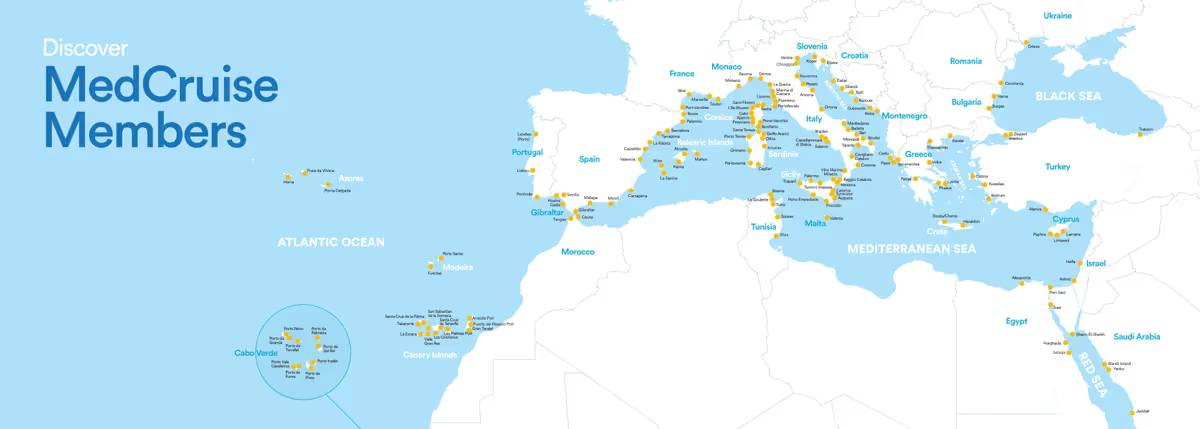
Representing the largest cruise ports association that connects now 160 ports and 59 associate members across 3 continents, I will bring the collective perspective of a region that is one cornerstone of international cruising, now entering a new chapter defined by sustainability, innovation and inclusivity. For MedCruise, the central message is clear: the road ahead for cruise tourism is defined by transformation through alternative fuels, shore power, circular economy initiatives and new forms of collaboration that will totally redefine the cruise experience.
As MedCruise approaches its 30th anniversary in 2026, the association is focused on helping its members evolve into smart, green and people-centred ports, ready to lead responsibly in an era of environmental transition.
Among our core themes, collaboration stands out as a guiding principle: we are strengthening ties with international partners such as Cruise Europe, Cruise Britain, Cruise Norway, and Cruise Baltic, as well as with global associations including CLIA, ESPO and AIVP. These partnerships are essential not only to share best practices but also to coordinate sustainability goals and respond collectively to emerging market trends. Such cross-regional cooperations ensure that the Mediterranean’s diverse cruise destinations remain competitive, resilient and aligned with global standards.
Another highlight on the agenda is the new MedCruise Working Group on “Economic Impact Assessments”, led by Lorenzo Vera (Port of Motril) in collaboration with Professor Thanos Pallis (University of Piraeus). This data-driven initiative is focused on evaluating the socio-economic impact of cruise tourism and fostering dialogue with local communities. By quantifying the added value of cruise-related activities, the group aims to strengthen the evidence base for sustainable policy decisions and demonstrate how responsible cruising contributes to the vitality of regional economies.
I will also introduce the new “MedCruise Blue Community”, led by Luz Marina Espiau of Tenerife Ports in collaboration with Seidor. This innovative program promotes knowledge sharing in digital transformation and technological innovation across ports, enabling members to exchange best practices and accelerate their evolution toward smarter, more connected operations. This collaborative platform reflects MedCruise’s broader commitment to fostering an open space for learning and cooperation among its members.
Finally, I will also share some of key takeaways from a joint survey conducted from March to July 2025 by MedCruise, Cruise Baltic, Cruise Norway, Cruise Britain and Cruise Europe, encompassing more than 400 cruise destinations. This pan-European study sought to produce reliable, comparative data on how cruise tourism integrates into local tourism economies. Ultimately, our vision will certainly resonate with both policy makers and industry leaders gathered in Madrid: the future of cruise tourism depends on collective intelligence, solid data and shared purpose.
More than ever, through cooperation, innovation and a steadfast commitment to sustainability, MedCruise is steering a course toward a more responsible and connected blue economy, one where ports serve not only ships, but people, communities and the planet alike.